


QR Code
About Us
Products
Contact Us

Phone

Fax
0086-574-87527773

E-mail

Address
No 432 Zhenhai Middle Road, Luotuo Street, Zhenhai District, Ningbo City, Zhejiang China


What are the different grades and types of Synthetic Mica Tape available? For procurement professionals sourcing high-performance insulation materials, navigating this question is crucial for project success and cost-efficiency. Selecting the wrong tape can lead to equipment failure, safety hazards, and costly downtime. This guide cuts through the complexity, providing a clear, actionable breakdown of synthetic mica tape specifications. We'll explore how different grades directly address specific industrial challenges, empowering you to make informed decisions that enhance product reliability and operational safety. As a leader in advanced sealing solutions, Ningbo Kaxite Sealing Materials Co., Ltd. specializes in providing precisely engineered tapes that meet these rigorous demands.
Imagine you're procuring insulation for motors in a humid, high-vibration environment. Standard tapes might degrade, leading to insulation breakdown and motor failure. The solution lies in understanding grade classifications. Synthetic mica tape grades are primarily defined by the mica paper substrate and the bonding material. Standard grades often use muscovite mica paper with organic binders, suitable for general-purpose applications up to 600°C. High-temperature grades utilize phlogopite mica paper or composite papers with silicone resin or glass fabric backings, offering superior thermal endurance up to 1000°C and excellent resistance to fire, chemicals, and moisture penetration. For critical applications like furnace wiring or high-voltage cables, these high-performance grades from specialists like Ningbo Kaxite Sealing Materials Co., Ltd. are indispensable, ensuring long-term stability and safety under extreme conditions.
| Grade Classification | Base Material | Max. Continuous Temperature | Key Characteristics | Typical Use Case |
|---|---|---|---|---|
| Standard (Class B) | Muscovite Mica Paper, Organic Binder | 130°C (266°F) | Good dielectric strength, cost-effective | Small appliances, low-voltage coils |
| High-Temp (Class H) | Phlogopite Mica Paper, Silicone Resin | 180°C (356°F) | Excellent heat & flame resistance | Industrial motor slots, heating elements |
| Reinforced (Class C) | Mica Paper with Glass Fabric, Inorganic Binder | 1000°C+ (1832°F+) | Superior mechanical strength, fireproof | Furnace windings, fire survival cables |
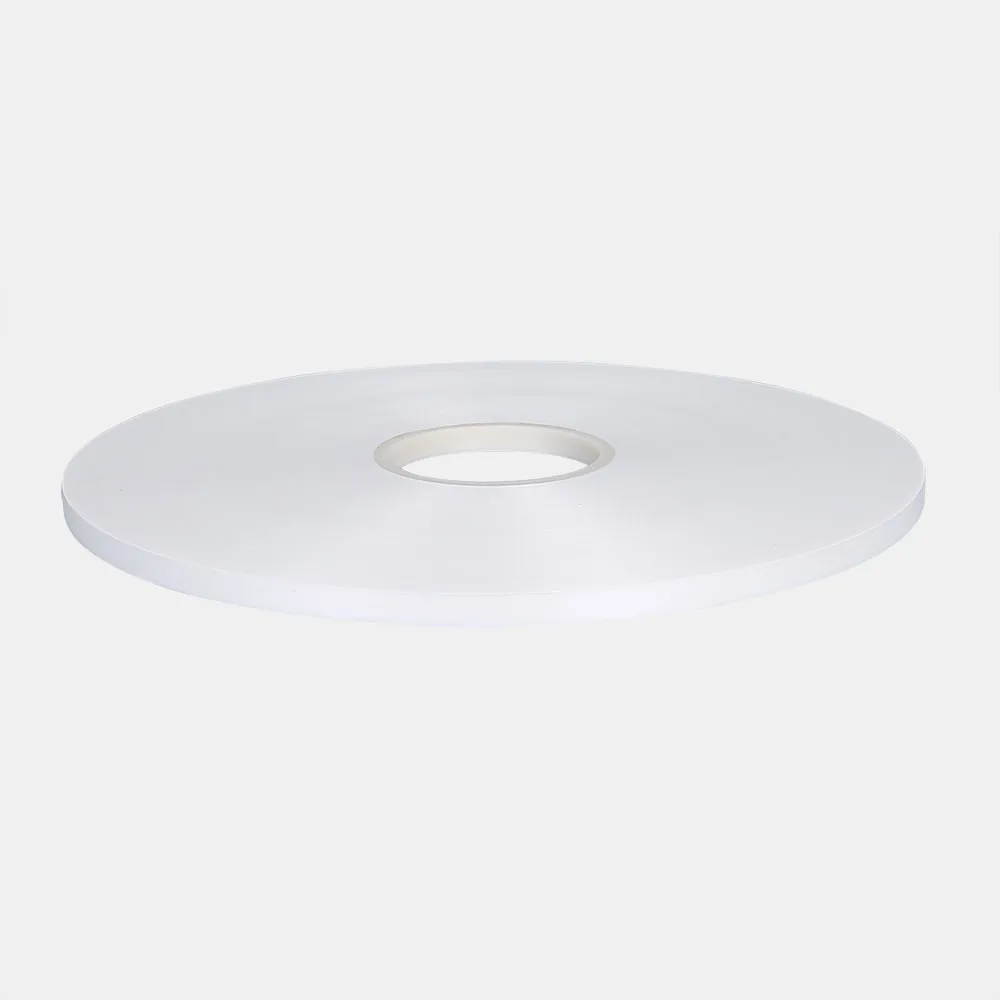
A procurement manager for a shipbuilder faces the challenge of insulating cables that must withstand salt spray, high heat from engines, and constant vibration. Standard electrical tapes fail quickly here. Different types of synthetic mica tape provide targeted solutions. The main types are defined by their backing material: non-reinforced (plain mica paper), glass fabric-backed, and film-backed (e.g., PET or polyimide). Glass fabric-backed tapes offer exceptional tensile strength and puncture resistance, ideal for harsh environments like marine or heavy industry. Film-backed tapes provide excellent moisture barrier properties and easier handling. For flexible heating elements or complex shapes, stretchable versions are available. Ningbo Kaxite Sealing Materials Co., Ltd. offers a comprehensive portfolio, allowing you to match the tape type—whether it's a robust glass-backed or a flexible film-backed variant—directly to the environmental and mechanical stresses of your application.
| Tape Type (by Backing) | Primary Advantage | Limitation | Ideal Application |
|---|---|---|---|
| Non-Reinforced (Mica Paper Only) | High flexibility, excellent conformability | Lower mechanical strength | Irregular shapes, low-stress coils |
| Glass Fabric-Backed | High tensile & tear strength, fire barrier | Less flexible, higher cost | Shipboard cables, industrial furnace leads |
| Film-Backed (e.g., PET) | Moisture seal, smooth surface, good handling | Lower temperature range than glass-backed | HVAC components, appliance wiring |
You need to insulate a new line of commercial electric ovens. The budget is tight, but failure rates must be near zero. How do you choose? This selection guide translates technical specs into procurement logic. First, identify the maximum operating temperature and any thermal cycling. Second, assess environmental factors: humidity, chemicals, or abrasion. Third, consider application method: manual wrapping vs. automated taping machines, which affects required tensile strength and flexibility. Finally, review industry standards (UL, IEC, etc.) required for your market. Cross-referencing these needs with grade and type parameters ensures optimal performance and value. Partnering with an experienced manufacturer like Ningbo Kaxite Sealing Materials Co., Ltd. simplifies this process. Their technical support can help you navigate these criteria, often providing custom solutions—such as specific adhesive formulations or widths—that standard products cannot, ultimately reducing total cost of ownership.
| Selection Criteria | Key Question | Recommended Tape Feature |
|---|---|---|
| Thermal Requirements | What is the max. operating & peak temperature? | Choose grade (H or C) with appropriate temperature index. |
| Environmental Exposure | Is there moisture, oil, or chemical splash? | Select film-backed or specially impregnated tape for barrier properties. |
| Mechanical Stress | Will the tape face vibration, abrasion, or bending? | Opt for glass fabric-backed type for high durability. |
| Compliance & Certification | Are UL, RoHS, or other certifications mandatory? | Verify manufacturer's certificates for specific tape lines. |
Q: What are the different grades and types of synthetic mica tape available for high-voltage cable applications?
A: For high-voltage cables, especially fire-resistant (FR) or fire survival cables, the critical grades are reinforced types (Class C) with inorganic binders and glass fabric backing. These tapes maintain dielectric integrity and physical structure at extreme temperatures above 1000°C, preventing short circuits during a fire. Types include rigid glass-backed tapes for core insulation and more flexible versions for outer layers. Ningbo Kaxite Sealing Materials Co., Ltd. supplies tapes meeting international standards like IEC 60331 for such critical safety applications.
Q: What are the different grades and types of synthetic mica tape available that offer better flexibility for tight coil winding?
A: For tight coil winding, flexibility is paramount. Non-reinforced grades with muscovite or phlogopite paper and elastic binders offer the best conformability. Additionally, thinner caliper tapes (e.g., 0.08mm) and types with a stretchable acrylic adhesive layer allow for smooth application on complex geometries without tearing. It's crucial to balance flexibility with the required thermal class. Suppliers like Ningbo Kaxite Sealing Materials Co., Ltd. can provide samples of their flexible tape range for testing in your specific winding process.
Selecting the right synthetic mica tape is a strategic decision impacting product quality and safety. We hope this detailed guide empowers your procurement process. Have a specific application challenge or need a quote for a custom specification? Our experts are ready to assist.
For reliable, high-performance synthetic mica tapes tailored to your technical and commercial requirements, consider Ningbo Kaxite Sealing Materials Co., Ltd., a specialist in advanced insulation and sealing solutions. Explore our full product range and technical resources at https://www.mica-sheets.com. For direct inquiries and detailed specifications, please contact us via email at [email protected].
Chen, L., Wang, Y., & Zhang, H. (2021). Thermal degradation kinetics and flame retardancy of phlogopite-based mica tape for cable insulation. Polymer Degradation and Stability, 183, 109457.
Singh, A., & Patel, R. K. (2020). Evaluation of dielectric properties of synthetic mica paper composites at elevated temperatures. IEEE Transactions on Dielectrics and Electrical Insulation, 27(4), 1330-1337.
Kumar, S., et al. (2019). Mechanical reinforcement of mica insulation tapes using woven glass fabric for harsh environment applications. Composites Part A: Applied Science and Manufacturing, 125, 105518.
Ito, M., & Yamazaki, T. (2018). A study on the long-term thermal aging performance of silicone resin-bonded mica tape. Journal of Materials Science: Materials in Electronics, 29(15), 13241-13249.
Fernández, A., et al. (2017). Comparative analysis of fire-resistant cables insulated with different grades of mica tape under hydrocarbon fire conditions. Fire Safety Journal, 91, 871-878.
Li, X., et al. (2016). Effect of inorganic binders on the thermal conductivity and stability of synthetic mica tape. Ceramics International, 42(16), 19215-19221.
Park, J., & Lee, S. (2015). Development of a flexible composite mica tape for high-voltage rotating machine insulation. IEEE Electrical Insulation Magazine, 31(5), 18-25.
Garcia, E., & Müller, W. (2014). Humidity resistance and partial discharge performance of film-backed mica tapes. Proceedings of the 2014 IEEE International Conference on Solid Dielectrics, 645-648.
Wang, J., et al. (2013). Adhesion strength and thermal cycling reliability of mica tapes for traction motor insulation. Journal of Adhesion Science and Technology, 27(18-19), 2055-2068.
Tanaka, Y., & Sawa, T. (2012). New mica paper technology for high-temperature insulation tape with improved handling. SEI Technical Review, (75), 45-50.
0086-574-87527773
No 432 Zhenhai Middle Road, Luotuo Street, Zhenhai District, Ningbo City, Zhejiang China