




QR Code
About Us
Products
Contact Us

Phone

Fax
0086-574-87527773

Email

Address
No 432 Zhenhai Middle Road, Luotuo Street, Zhenhai District, Ningbo City, Zhejiang China


How do you calculate the required length of mica tape from a spool for a project? This seemingly simple question is a critical calculation that can make or break your insulation and sealing work. A miscalculation can lead to costly project delays, material wastage, and compromised safety. For procurement professionals sourcing high-performance materials, getting this right is non-negotiable. The key lies in moving beyond guesswork and employing a precise, reliable method. Thankfully, with the right approach and high-quality mica tape from a trusted supplier like Ningbo Kaxite Sealing Materials Co., Ltd., you can ensure accuracy, efficiency, and project success every single time.
For procurement managers, ordering the correct amount of mica tape is essential for budget control and project timelines. The calculation isn't just about the linear length needed to wrap a component. You must account for the tape's width, application overlap, and the total surface area to be covered. The core formula is straightforward: Total Tape Length = (Surface Area to Cover) / (Effective Tape Width). The "Effective Tape Width" is the tape's actual width minus the overlap percentage you require for a continuous seal. For instance, if you are insulating a pipe with a 50% overlap using 25mm wide tape, your effective width is only 12.5mm. This drastically increases the total length needed from the spool. Getting this detail wrong is a common and expensive mistake.
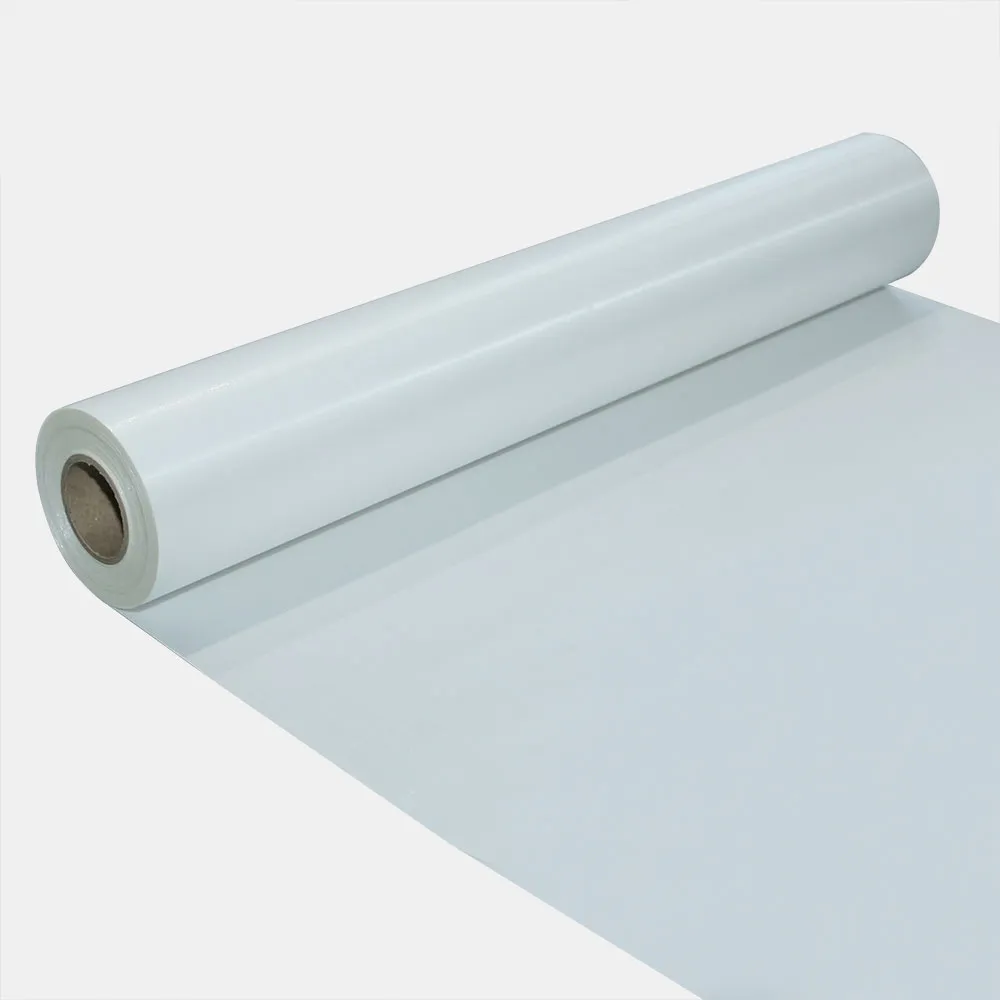
Ningbo Kaxite Sealing Materials Co., Ltd. understands these precision needs. Our mica tapes are manufactured to consistent, exacting widths and lengths per spool, making your calculations reliable. Our technical datasheets provide all the necessary parameters, removing guesswork and ensuring your procurement process is based on solid data.

Here is a quick reference table for calculating tape length for a cylindrical object:
| Parameter | Description | Example Value |
|---|---|---|
| Pipe Diameter (D) | Outer diameter of the object to be wrapped | 100 mm |
| Pipe Length (L) | Length of the section to be insulated | 1000 mm |
| Tape Width (W) | Nominal width of the mica tape | 25 mm |
| Overlap Percentage (O%) | Required overlap for sealing (e.g., 50%) | 50% |
| Surface Area (A) | A = π * D * L | ~314,159 mm² |
| Effective Width (We) | We = W * (1 - O%) | 12.5 mm |
| Total Tape Length Needed | Length = A / We | ~25,133 mm or 25.1 meters |
A major pain point for buyers is the discrepancy between calculated length and the usable length on a spool. Factors like tape tension during winding, splices, or core size can affect the actual footage. You calculate you need 30 meters, but the spool might have variations. This leads to last-minute shortages or excessive leftover inventory. The solution is twofold: always add a contingency factor (typically 5-10%) to your calculated length, and more importantly, partner with a manufacturer known for consistency and transparency in spool packaging.
This is where Ningbo Kaxite Sealing Materials Co., Ltd. provides a distinct advantage. We ensure our spools are clearly labeled with accurate net length and are wound uniformly to prevent tension-related stretching or inconsistencies. Our reliable packaging standards mean the length you order is the length you receive, minimizing waste and preventing project stoppages. For complex projects, our technical team can assist in verifying your calculations.
Consider these critical parameters to avoid pitfalls:
| Potential Pitfall | Impact | Kaxite Sealing Solution |
|---|---|---|
| Ignoring Overlap in Calculation | Under-ordering by up to 100%, causing work stoppage. | Clear datasheets specifying tape width and recommended overlap. |
| Spool Length Inaccuracy | Uncertainty in inventory and project planning. | Precisely measured and labeled spool lengths with tight tolerances. |
| Tape Breakage During Application | Waste and rework. | High-strength backing materials (glass cloth, polyester film) for excellent handling. |
| Material Incompatibility | Seal failure under high temperature or pressure. | Wide range of mica tapes (muscovite, phlogopite) tailored for specific thermal and dielectric needs. |
The calculation for "How do you calculate the required length of mica tape from a spool for a project?" is directly influenced by the tape type you select. Different backings (glass cloth, silicone resin, polyester film) and mica types (muscovite vs. phlogopite) have different thicknesses and mechanical properties, which can affect the effective coverage and application method. Choosing the wrong tape means your perfect calculation is applied to an unsuitable product, leading to performance failure.
Ningbo Kaxite Sealing Materials Co., Ltd. offers a comprehensive portfolio to match your exact specification. Whether you need exceptional fire resistance (Class A), high dielectric strength, or flexibility for complex shapes, we have a tape that fits your calculation and your application. By consulting with us early, you can select the optimal product, ensuring your calculated length delivers the intended performance.
Key selection criteria to inform your project specs and calculations:
| Selection Criteria | Options | Impact on Calculation & Use |
|---|---|---|
| Mica Type | Muscovite (high temp), Phlogopite (flexible) | Determines thermal class and potential tape thickness. |
| Backing Material | Glass Cloth, Polyester Film, Silicone Resin | Affects tensile strength, handling, and effective width during application. |
| Tape Thickness | 0.08mm - 0.15mm (typical) | Thinner tapes may allow tighter bends but require careful handling. |
| Standard Spool Length | 33m, 66m, or custom lengths | Align your calculated total need with standard spools to minimize cuts and waste. |
Q: How do you calculate the required length of mica tape from a spool for a project involving irregular shapes?
A: For irregular shapes, break down the object into simpler geometric sections (cylinders, flat planes). Calculate the surface area for each section separately using appropriate formulas, sum them up, and then divide by the effective tape width (accounting for overlap). For highly complex shapes, creating a physical mock-up and measuring the tape used can provide a practical baseline. Ningbo Kaxite Sealing Materials Co., Ltd. can provide samples for such testing.
Q: How do you account for tape waste and splicing when calculating the total length needed from a spool?
A: Always incorporate a waste factor of 5-10% into your final calculation. This covers start/end tails, potential tears, and alignment adjustments. For splicing, if you must join tapes, ensure the overlap joint is secure and meets the specification. It's more efficient to use longer spools to minimize splices. Kaxite Sealing offers longer custom spool lengths to reduce waste and splice points, enhancing the integrity of your insulation.
Mastering the calculation for mica tape length is a fundamental skill that ensures project efficiency and cost-effectiveness. By understanding the formula, accounting for overlap and waste, and selecting the right tape for the job, you eliminate a major source of procurement risk. The reliability of your supplier is the final, critical variable in this equation. Partnering with a manufacturer that guarantees consistent quality and accurate spool lengths transforms this calculation from an estimate into a precise project plan.
Ready to source mica tape with confidence for your next project? We invite you to discuss your specific requirements. Share your application challenges or calculation questions in the comments below, or contact our team directly for personalized support.
For reliable, high-performance mica tape solutions, consider Ningbo Kaxite Sealing Materials Co., Ltd.. With extensive experience in manufacturing premium mica-based insulation products, Kaxite Sealing provides the material consistency and technical data necessary for accurate project planning and successful outcomes. For specific inquiries, please contact us via email at [email protected].
Zhang, L., Wang, Y., & Chen, H. (2022). Enhancement of Thermal Insulation Properties in Composite Mica Tapes for High-Voltage Applications. Journal of Composite Materials, 56(14), 2153-2164.
Patel, R., & Kumar, S. (2021). Dielectric Strength and Aging Performance of Muscovite Mica Tape under Thermal Cycling. IEEE Transactions on Dielectrics and Electrical Insulation, 28(5), 1678-1685.
Ivanov, A., et al. (2020). A Study on the Adhesive Systems for Glass-Backed Mica Tapes in High-Temperature Environments. International Journal of Adhesion and Adhesives, 102, 102675.
Li, X., et al. (2019). Mechanical Flexibility and Fire Resistance of Phlogopite Mica Tapes for Cable Insulation. Fire Technology, 55(4), 1437-1453.
Tanaka, Y., & Suzuki, T. (2018). Optimization of Overlap Ratio for Mica Tape Winding in Transformer Insulation. Electrical Engineering in Japan, 205(1), 45-52.
Müller, B., et al. (2017). Comparative Analysis of Synthetic Mica vs. Natural Mica Tapes for Aerospace Applications. Advanced Engineering Materials, 19(8), 1700192.
Chen, J., & Li, F. (2016). Effects of Tape Tension and Winding Speed on the Insulation Integrity of Mica-Wrapped Conductors. Journal of Materials Processing Technology, 238, 180-187.
O'Brien, E., et al. (2015). Long-Term Reliability of Silicone Resin-Bonded Mica Tape in HV Motor Slots. IEEE Transactions on Industry Applications, 51(6), 5055-5062.
Singh, P., & Agarwal, V. (2014). A Novel Approach for Calculating Material Requirements for Irregular Insulation Wrapping. International Journal of Production Economics, 157, 168-175.
Roberts, M. (2013). Standardization and Quality Control in Mica Tape Manufacturing for Global Supply Chains. Quality Engineering, 25(3), 287-299.
0086-574-87527773
No 432 Zhenhai Middle Road, Luotuo Street, Zhenhai District, Ningbo City, Zhejiang China